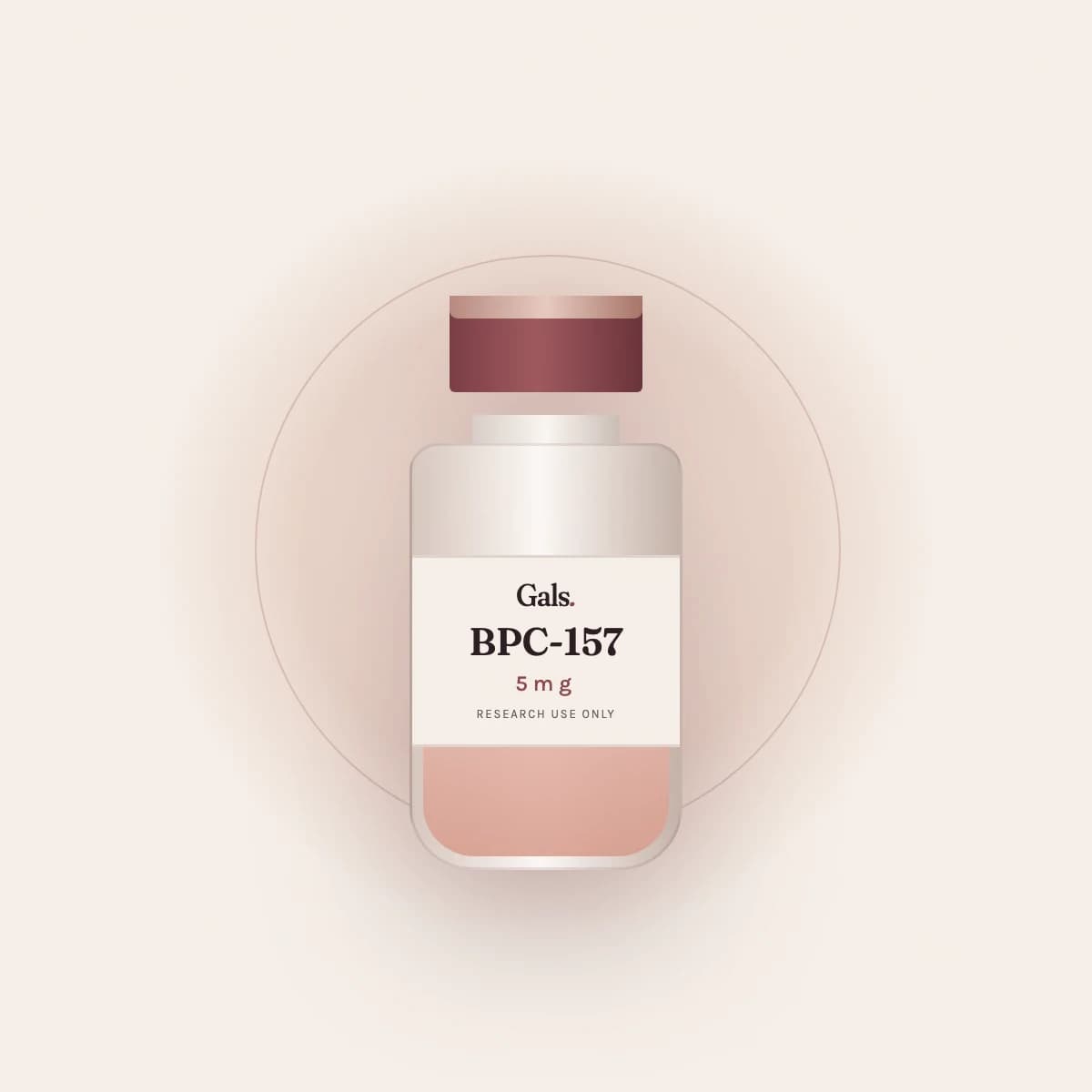
HPLC 98.67%
BPC-157
4.9(38 reviews)Research-grade · For in-vitro research use only
98.67%HPLC
purity
purity
In stockOrder before 12pm AEST for same-day dispatch
Bundle & save— save up to 30%
1
Pay by bank transfer or PayID · we never see or store your banking login
All prices in AUD, inclusive of GST. Shipping calculated at checkout — free express on orders over $300.
- Third-party COA — Independent HPLC + LC-MS for this product
- Express dispatch in 24h — Tracked express post from our Australian facility
- Protective packaging — Plain, protective outer packaging on every order
- Free express shipping — On orders over $300
1
A synthetic pentadecapeptide studied in laboratory research settings. Supplied as a lyophilised powder for in-vitro research use. Each batch is independently HPLC-tested with a published Certificate of Analysis.
Peptide & tissue-signalling research
BPC-157 is a synthetic pentadecapeptide — a linear 15-residue sequence with no cysteines, no disulfide bridges, and no cyclisation or fatty-acid modification. Its sequence corresponds to a partial region of a larger protein described in the gastric-juice literature, and the peptide as supplied is produced by solid-phase synthesis rather than isolated from tissue. The absence of secondary structural constraints is itself a notable feature: it is a small, flexible, highly water-soluble peptide, which is one reason it recurs so often as a model compound in peptide-handling and stability method development.
The sequence entered the literature in the 1990s through work on gastric protective fractions, and the designation "body protection compound" reflects the naming convention of that original programme rather than any characterised function. Because interest in it grew rapidly outside the small group of laboratories that first described it, the primary literature is unusually concentrated, and reviews frequently note that independent replication remains limited. That context is relevant to anyone designing an experiment around it: the compound is a well-defined chemical entity, but the surrounding evidence base is narrower than the volume of secondary commentary suggests.
Research reported in the primary literature examines it in relation to nitric-oxide pathway signalling, growth-factor receptor expression (VEGFR2 among them), and angiogenic and cell-migration readouts in cultured cells and in animal models of tissue injury. Further work has looked at interactions with dopaminergic and serotonergic systems and at gastrointestinal mucosal models. These are described as areas of investigation; the findings reported in those studies belong to the investigators who produced them and are not represented here as established effects, uses, or outcomes.
Analytical verification is disproportionately important for this sequence. Because it is short, unmodified, and inexpensive to synthesise, the material circulating under this name varies widely in provenance, and truncated or deletion sequences arising from incomplete coupling during synthesis are the characteristic impurity class. HPLC resolves those closely related species and mass spectrometry confirms the intact molecular mass, so identity and purity data at the batch level are what make results comparable between experiments — an unverified sequence is the most common uncontrolled variable in this research area.
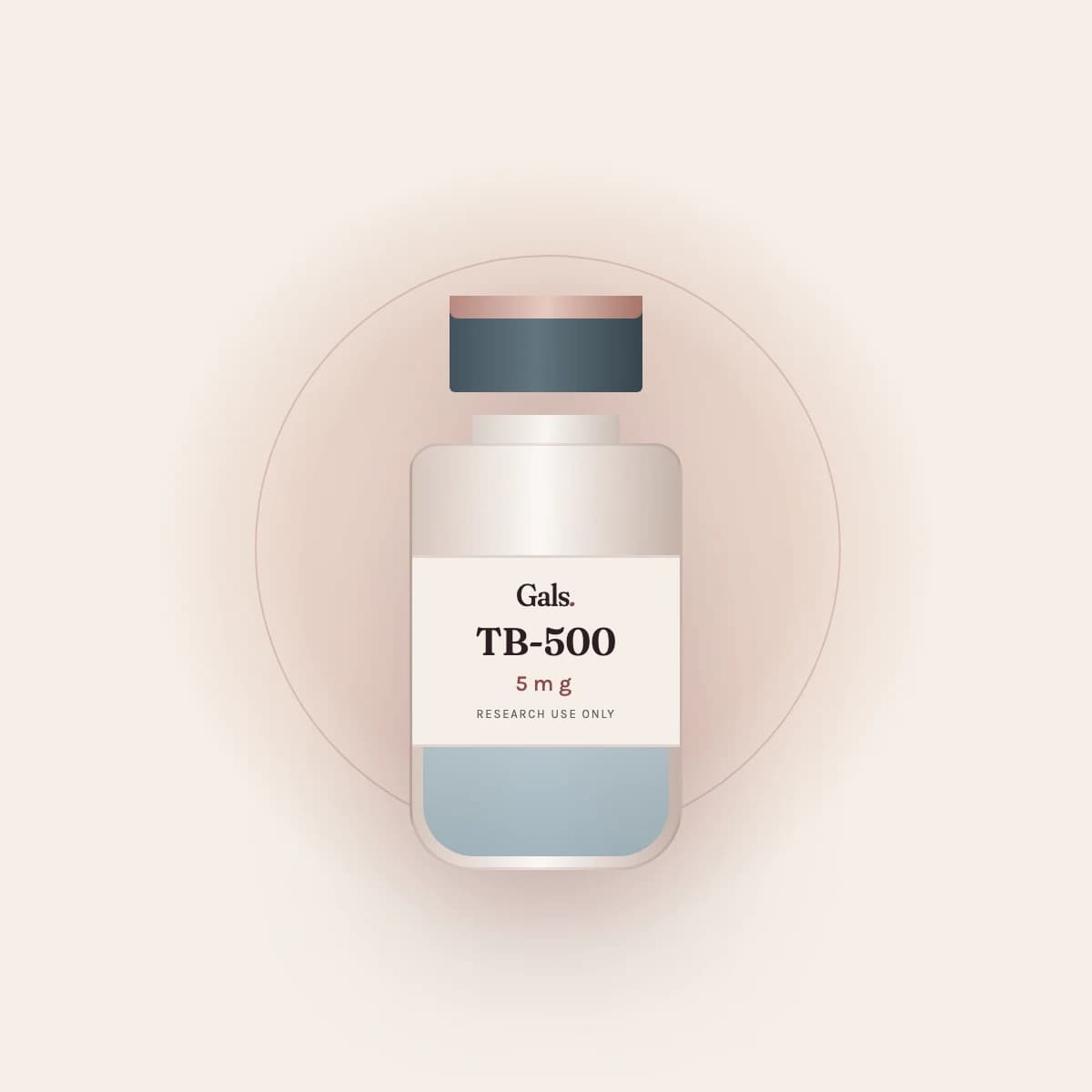
It is most often set alongside TB-500 in comparative studies, and the two are frequently confused despite being structurally unrelated: BPC-157 is a synthetic 15-residue sequence with no natural full-length parent in circulation, whereas TB-500 corresponds to a fragment of thymosin β4 and carries a defined actin-binding motif. Comparisons between them are comparisons of two different chemistries studied in partially overlapping tissue-model contexts, not of variants within one peptide family.
Research areas BPC-157 is studied in
- Nitric-oxide pathway signalling in cultured cell systems
- Angiogenesis and growth-factor receptor expression research, including VEGFR2 readouts in vitro
- Cell-migration and tissue-model research
- Gastrointestinal mucosal research models
- Peptide-stability and solution-degradation characterisation for short unmodified sequences
- Comparative structure–function work against TB-500 and other tissue-model reference peptides
Handling and reconstitution
Supplied as a lyophilised powder and readily soluble in water at typical laboratory concentrations; reconstitute with bacteriostatic or sterile water, directing the solvent down the vial wall and swirling rather than shaking to avoid foaming and surface denaturation. As a small unmodified linear peptide it has limited solution stability, so reconstituted material is best kept cold, protected from light, and used within a short working window rather than held long-term in solution. Keep the unreconstituted powder sealed at -20°C, and allow vials to reach room temperature before opening to prevent condensation on the hygroscopic cake.
Product highlights
- Purity
- ≥ 98% (HPLC)
- Appearance
- White to off-white lyophilised powder
- Solubility
- Soluble in bacteriostatic / sterile water
- Testing
- Independent third-party HPLC + LC-MS
- Storage
- Store lyophilised at -20°C, protected from light
- Intended use
- In-vitro laboratory research only
Read the BPC-157 research overview →
For laboratory research use only. Not for human or veterinary use, consumption, or therapeutic application.
Questions
BPC-157 — frequently asked questions
What is BPC-157?
BPC-157 is a synthetic pentadecapeptide — a linear 15-residue sequence (CAS 137525-51-0) with no disulfide bridges, cyclisation, or fatty-acid modification. The sequence corresponds to a partial region of a larger protein described in the gastric-juice literature, and the material supplied is produced by solid-phase synthesis rather than isolated from tissue. It is supplied for in-vitro laboratory research only.
Is BPC-157 legal in Australia?
BPC-157 is not an approved therapeutic good in Australia and is not registered on the Australian Register of Therapeutic Goods. It is supplied here as a laboratory research chemical for in-vitro use only, not for human or veterinary use. This is not legal advice; confirming that a given laboratory use is permitted under the Commonwealth, state, and institutional rules that apply is the researcher’s responsibility.
What is BPC-157 studied in relation to?
The primary literature examines it in relation to nitric-oxide pathway signalling, growth-factor receptor expression including VEGFR2 readouts, and angiogenic and cell-migration endpoints in cultured cells and animal tissue-injury models. Those are described as areas of investigation. The findings reported belong to the laboratories that produced them and are not effects, uses, or outcomes claimed by Gals.
Before you order
Research guides for BPC-157
Background reading for researchers — what this compound is, how it is positioned, and how to verify what is in the vial.
Compound profileBPC-157 research monographStructure, CAS, sequence, purity and the research areas BPC-157 is studied in.View profile →Compound guide
BPC-157 in Australia: A Research Overview
What BPC-157 is, why it is studied in laboratory research, and what to look for when sourcing it in Australia.
Read →LegalityIs BPC-157 Legal in Australia?
Where BPC-157 sits as a research compound in Australia and what research-use-only supply involves.
Read →Compound guideBPC-157 vs TB-500: A Research Compound Comparison
How BPC-157 and TB-500 differ as research compounds — by structure, molecular targets, and how each is investigated in the laboratory.
Read →